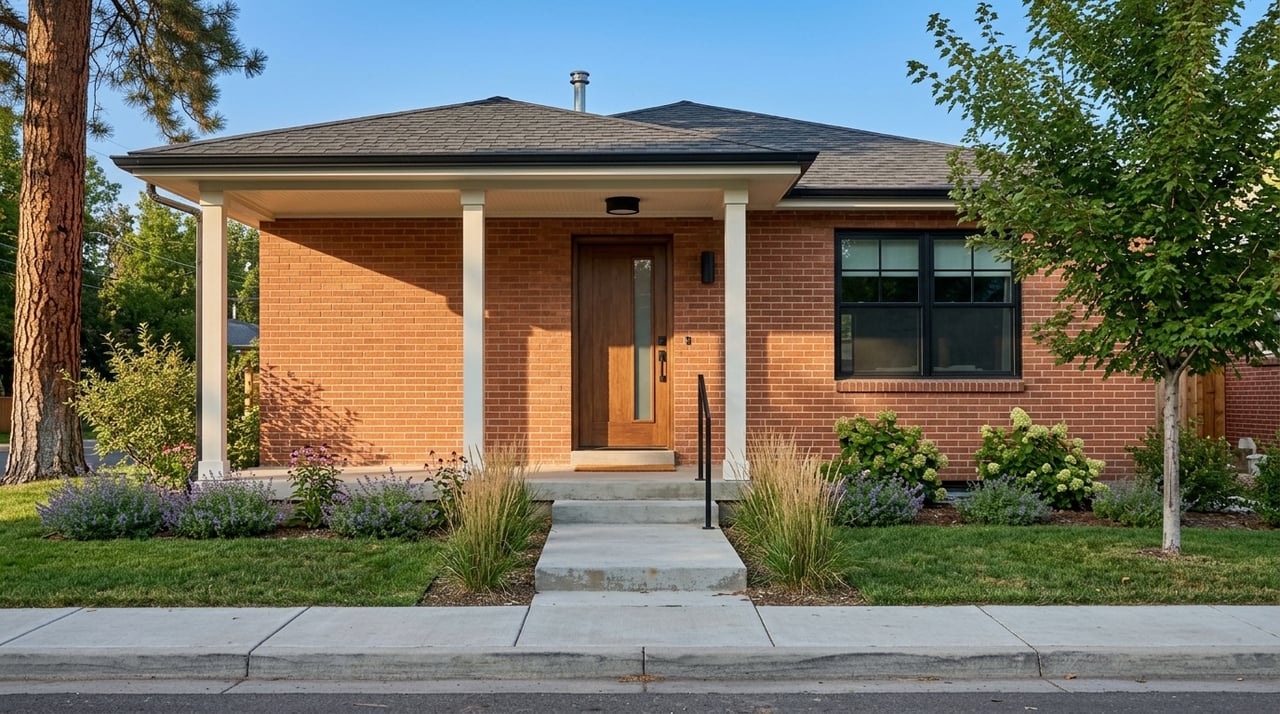
Englewood vs Denver Homes: Where to Begin Your Search
April 23, 2026
April 23, 2026
If you are torn between Englewood and Denver, you are not alone. Many buyers start with a broad Denver-area search, then realize that the day-to-day feel of where you live matters just as much as square footage or price. When you understand how Englewood and central Denver differ in scale, housing, and transit, you can narrow your search with more confidence. Let’s dive in.
A big reason this comparison matters is scale. According to the U.S. Census Bureau, Englewood has an estimated 35,238 residents across 6.56 square miles, while Denver has 729,019 residents across 153.08 square miles. That difference shapes how each place feels when you tour homes, run errands, or think about your commute.
In simple terms, Englewood often feels more compact and locally scaled. Central Denver feels like part of a much larger, denser urban system with more moving parts. Neither is better for every buyer, but one may fit your lifestyle more naturally.
If you want a smaller-city feel without leaving the metro area, Englewood deserves a close look. The city frames its downtown around CityCenter, South Broadway, and a wellness-focused district, which gives the area a more defined and manageable footprint.
That can make your home search feel easier to organize. Instead of sorting through a huge number of districts and housing types, you can focus on a few clear activity centers and decide how close you want to be to transit, local businesses, or medical employment hubs.
Englewood’s housing mix leans toward older suburban character with redevelopment along key corridors. One standout example is Arapahoe Acres, a 30-acre postwar planned community with 124 homes in International and Usonian styles that was added to the National Register of Historic Places in 1998.
At the same time, Englewood is not frozen in time. City materials note that CityCenter is a transit-oriented mixed-use district, with plans expected to bring 600 to 700 new apartments, while Old Hampden already includes newer apartments and condos. That means your options may include both established residential areas and newer multifamily choices near key corridors.
For many buyers, convenience matters as much as home style. Englewood Station serves the D Line, five bus routes, and includes free parking, making it a straightforward transit hub for everyday use.
The city also notes that downtown Englewood is supported by major thoroughfares, light rail, buses, and the Englewood Trolley, with mobility connections shaped by US 85, SH 88, and US 285. There is also the free bert shuttle connecting CityCenter, downtown businesses, and the medical area around Craig Hospital and Swedish Medical Center. If you like the idea of having one strong, easy-to-understand transit anchor, Englewood may feel more intuitive.
If you want more housing variety and a more urban street environment, central Denver may be the better place to begin. Denver’s scale alone creates more overlap between neighborhoods, transit corridors, and housing formats.
That can be appealing if you are still figuring out what kind of home fits you best. In central Denver, you may compare condos, townhomes, row homes, carriage homes, and detached houses across a wider range of settings without leaving the core of the city.
Denver’s housing stock is more varied than Englewood’s. The city’s ADU guidance notes that historic carriage homes still exist in older neighborhoods such as Baker, Capitol Hill, Curtis Park, City Park West, Congress Park, Cole, Whittier, Speer, Country Club, West Washington Park, and Platt Park.
Denver also defines missing-middle housing forms as duplexes, fourplexes, row homes, townhomes, and cottage housing. City materials also recognize condos and townhomes as part of the local housing stock, while bungalow preservation work in areas like Harkness Heights shows how much original neighborhood character still shapes the market. If you want the widest possible menu of housing types, Denver has the edge.
Central Denver also offers a denser transit network. RTD says the regional rail system includes 10 rail lines and 113 miles of service, and major hubs like Union Station and I-25/Broadway connect multiple bus and rail routes.
That kind of overlap can be helpful if you want multiple ways to move through the city. It also contributes to a busier, more layered experience, especially along major corridors such as Broadway, Colfax, 6th Avenue, Santa Fe Drive, I-25, and Speer.
For many buyers, the right starting point comes down to daily rhythm. Do you want a place that feels a little smaller and easier to mentally map, or do you want a place with more intensity, more options, and more urban energy?
Englewood’s downtown identity centers on civic, neighborhood, and corridor-based activity. The city describes South Broadway as a walkable main street, CityCenter as a mix of civic uses, offices, housing, and light rail access, and the wellness district as a cluster of hospitals, restaurants, and homes.
Central Denver feels more destination-oriented. The 16th Street project describes that corridor as an engaging downtown destination with pedestrian amenities, and Denver’s historic streetcar-era corridors support mixed-use blocks that often feel busier and more urban than Englewood.
Englewood is often the better starting point if you want:
If that sounds like your priorities, starting in Englewood can save you time. It may help you focus faster on the kind of setting that feels right for your everyday life.
Central Denver is often the better starting point if you want:
If you are still deciding between a condo, townhome, row home, or detached home, Denver may give you more opportunities to compare options side by side.
If you are unsure where to begin, ask yourself three practical questions:
Those answers can tell you where your first tours should happen. Once you identify the feel that fits you best, your home search usually becomes much more efficient.
If you are planning a move in South Metro Denver and want clear, experienced guidance on where to start, David Richins can help you compare locations, narrow your options, and move forward with confidence.
Stay up to date on the latest real estate trends.

Trust him for ultra-experienced, high-value real estate service in Englewood and South Metro Denver. With his 30+ years of market leadership, strategic insight, and personal dedication, he makes your buying or selling journey seamless and successful.