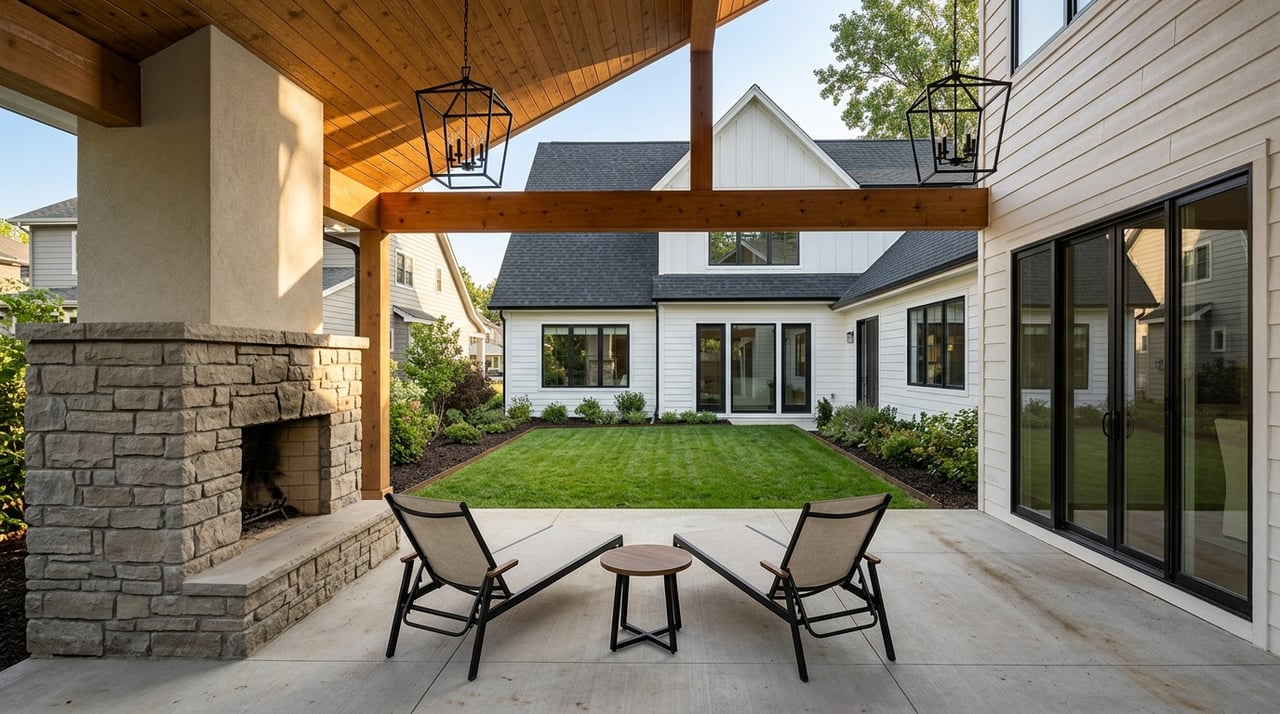
Castle Rock vs Parker Homes: How to Choose the Right Fit
May 21, 2026
May 21, 2026
If you are trying to choose between Castle Rock and Parker for your next move, you are not alone. Both towns sit in Douglas County, both attract buyers looking for more space and strong everyday convenience, and both can feel like great options at first glance. The difference usually comes down to how you want to live day to day, how far you want to commute, and what kind of housing and amenities fit your goals. Let’s dive in.
Castle Rock and Parker are both established South Metro Denver suburbs, but they offer slightly different experiences. Castle Rock is the larger town, with an estimated population of 83,815 across 34.29 square miles, while Parker has about 65,985 residents across 22.34 square miles. That size difference shows up in how each place feels, from housing variety to recreation and daily movement around town.
From a pricing standpoint, both markets sit in the mid-$600,000s. Redfin reported a March 2026 median sale price of $635,500 in Castle Rock and $657,500 in Parker. Zillow’s late-March and April 2026 home value indexes were also a bit higher in Parker at $688,178 compared with $676,277 in Castle Rock.
Homes have also been moving a little faster in Parker. Redfin reported an average of about 15 days on market there, compared with 26 days in Castle Rock. If you are shopping in a competitive price range, that may affect how quickly you need to act.
Castle Rock tends to provide a wider mix of housing types and home ages across town. According to the town’s planning documents, you can find single-family detached homes, attached homes such as duplexes, triplexes, and townhomes, along with multi-family development. The town also notes that housing ranges from homes that are more than 100 years old near the center of town to newer construction in many styles.
That broader mix can matter if you want flexibility in your search. You may be comparing a newer suburban home, a townhome, a downtown-adjacent apartment option, or an older home closer to the center. For buyers who want more variety at the town-wide level, Castle Rock often gives you more to sort through.
Parker’s master plan describes neighborhoods that are primarily master-planned and include a range of densities and dwelling types. The town’s housing history notes that Parker was once dominated by single-family detached homes and townhomes, then added apartment complexes near downtown and along the E-470 corridor. Later planning updates continue to emphasize low- and medium-density residential areas, with higher densities in selected locations.
In practical terms, Parker may feel a bit more uniform in its suburban layout, especially if you are comparing larger planned communities. That can appeal to buyers who want a more consistent neighborhood pattern and easy access to town-center and corridor amenities. If your preference is a polished suburban setting with a concentrated downtown core, Parker may feel like a natural fit.
If your daily routine points toward Denver, the Denver Tech Center, or Denver International Airport, Parker has a clear location advantage for many buyers. Parker’s transportation plan says the town is about 20 miles southeast of Denver and offers easy access to I-25 and E-470, as well as DIA, Centennial Airport, the Denver Tech Center, and downtown Denver.
That does not mean every commute will be easy, but it does mean Parker is often the more practical choice if your work or regular travel pulls you north. For buyers relocating into South Metro Denver, commute direction is often one of the fastest ways to narrow this decision.
Castle Rock is farther south, with the town placing it about 31 miles south of Denver. Its transportation planning is more road-focused, and current I-25 improvements, including the Crystal Valley Interchange project, are intended to improve access to southern Castle Rock and Douglas County.
If your work, family, or lifestyle patterns take you along the south corridor, Castle Rock may make more sense. Buyers who regularly head toward the Colorado Springs side of the Front Range often prefer being farther south from the start. That can save time and simplify the rhythm of everyday life.
Castle Rock’s park and recreation footprint is one of its biggest strengths. The town manages 104 miles of trails, 25 parks, and more than 4,000 acres of open space, with added access through local partners. That gives Castle Rock a strong outdoor identity that many buyers notice right away.
The town also highlights destinations such as Philip S. Miller Park and the Miller Activity Complex, the Outlets at Castle Rock, and Downtown Festival Park. Festival Park hosts First Fridays, the Farmers Market, and other community events. If you want a town that feels especially tied to trails, open space, and large recreation destinations, Castle Rock has a strong case.
Parker emphasizes a historic downtown, a cultural arts center, parks, trails, open spaces, and year-round events. The town’s Q2 2025 performance measures list 44.46 trail miles and 174.9 acres of parkland. Parker also highlights amenities such as H2O’Brien Pool, the Parker Recreation Center’s indoor pool and lazy river, and arts programming.
A notable convenience update is the 296-space public parking garage that opened in January 2026 to serve the PACE Center and downtown. That supports one of Parker’s practical advantages: a more concentrated downtown and event area that can feel easier to access. If you want a suburban town with a more compact arts and downtown experience, Parker may better match your style.
Castle Rock may be the better fit if your priorities include:
For many buyers, Castle Rock feels a little more spread out and a little more outdoor-forward. That can be a major plus if you want room to breathe and more variety in your home search.
Parker may be the better fit if your priorities include:
If your week revolves around northbound commuting or you want a town center that feels more compact and organized around arts and events, Parker often rises to the top.
The market gap between Castle Rock and Parker is noticeable, but it is not dramatic. Based on the research, Parker is modestly pricier than Castle Rock in both median sale price and home value estimates. That difference may or may not matter depending on your budget, wish list, and how much home you need.
The more important point is value alignment. A slightly lower price in Castle Rock might come with the tradeoff of a longer northbound commute, while a slightly higher price in Parker may buy easier access to Denver-area job centers and a more compact town experience. The better choice is usually the one that fits your routine, not just the lower or higher number.
If you are stuck between the two, focus on three things first:
Once you answer those questions, the right fit often becomes much clearer. Castle Rock and Parker are both strong options, but they solve different problems for different buyers.
If you are comparing homes in Castle Rock, Parker, or both, having local guidance can save you time and keep your search focused. David Richins offers buyer and seller representation, relocation support, new construction guidance, and experienced local insight across the Douglas County corridor.
Stay up to date on the latest real estate trends.
Trust him for ultra-experienced, high-value real estate service in Englewood and South Metro Denver. With his 30+ years of market leadership, strategic insight, and personal dedication, he makes your buying or selling journey seamless and successful.