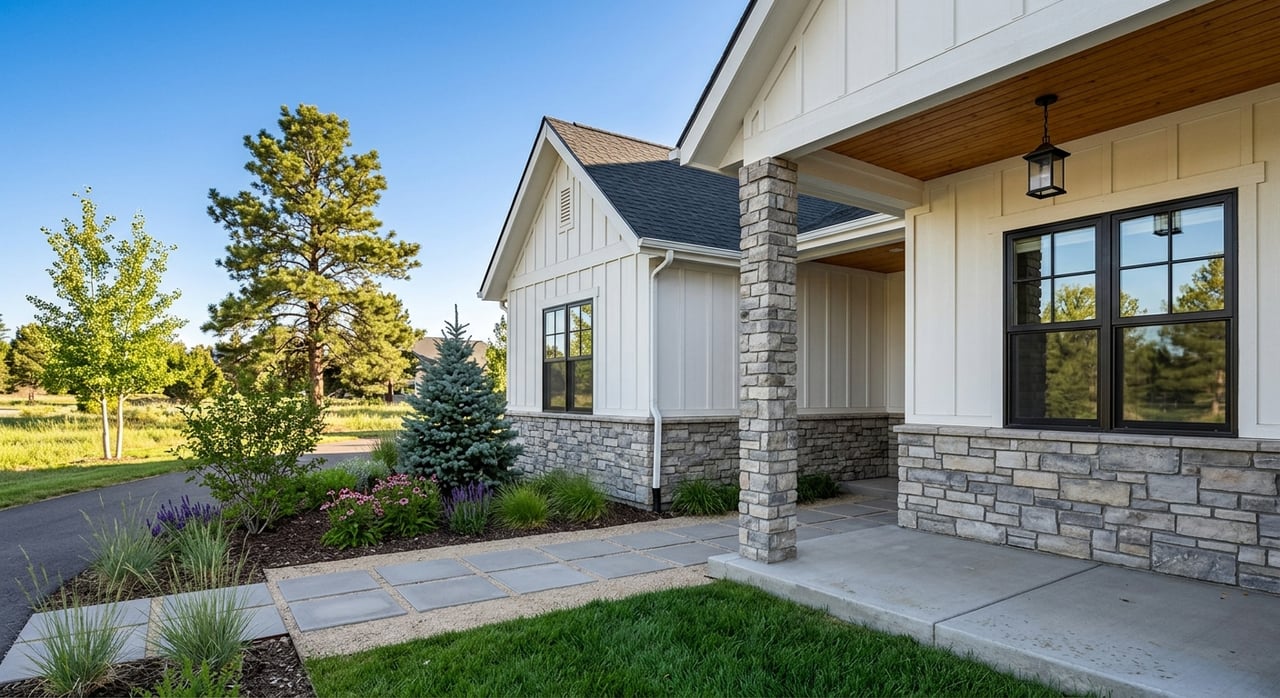
Homes Near Centennial Trail: Outdoor Living Guide
June 25, 2026
June 25, 2026
Living near Centennial Trail sounds simple until you realize the lifestyle comes with real tradeoffs. You may picture quick access to Boulder’s foothills, walkable central neighborhoods, and character-rich homes, but you also need to think about parking, historic rules, and limited inventory. If you want a clearer picture of what it’s really like to buy near this trail corridor, this guide will walk you through the setting, the housing mix, and the details that matter most. Let’s dive in.
Centennial Trailhead sits at 301 Sunshine Canyon Road and gives you direct access to the Mount Sanitas and Red Rocks areas. According to the City of Boulder, the trailhead is open daily from 5 a.m. to 11 p.m., has no fee, and sees high use with more than 200 average visits per day.
That high use helps explain why homes nearby appeal to buyers who want outdoor access built into daily life. The Red Rocks trail network starts here and continues toward The Peoples' Crossing, so this is more than a neighborhood trail stop. It is a gateway into one of Boulder’s most recognizable recreation corridors.
The trailhead also includes practical amenities that support regular use. You will find restrooms, picnic tables, 31 standard parking spaces, 2 ADA spaces, and bike racks. If you prefer transit, the nearest connection is the Broadway and Mapleton stop, about a nine-block walk or bike ride away.
There are a few usage rules worth knowing before you fall in love with the location. Open Space and Mountain Parks says mountain biking is not allowed in this area, and dogs must be leashed unless the owner has a voice-and-sight tag. If your ideal outdoor routine includes biking directly from this trailhead, that is important to know early.
Homes near Centennial Trail are best understood as part of a central Boulder micro-market rather than one single subdivision. City materials describe Central Boulder as a dynamic, diverse area in the heart of the city. It includes Downtown, Pearl Street Mall, University Hill, Boulder Creek, and Chautauqua.
This broader setting shapes what you can expect from the housing stock near the trail. The City of Boulder notes that nearly all of the city’s designated historic districts are located in Central Boulder. That means many nearby streets have a stronger sense of architectural variety and historical character than you would see in a newer planned community.
Several nearby residential pockets help define the area. The city identifies Mapleton Hill, Whittier, and Goss Grove as some of Boulder’s earliest neighborhoods. Newlands also sits north of downtown, adding another nearby option for buyers who want access to both central Boulder and the foothills.
If you are shopping near Centennial Trail, expect variety rather than uniformity. Buyers may see historic detached homes, smaller condos, duplexes, and some multi-unit properties in the surrounding area. That mix reflects both the age of the neighborhoods and the zoning patterns found in parts of central Boulder.
Mapleton Hill is one of the clearest examples of this character. It became one of Boulder’s local historic districts in 1982, and city materials describe it as having more than 500 homes with a wide variety of homes and architectural styles. For buyers, that can mean more charm and uniqueness, but it can also mean each property needs more individual review.
This is not a plug-and-play housing search where every block feels the same. One home may be a compact condo, while another may be a large detached historic residence on a very different lot. That range can be exciting, but it also makes local guidance and property-by-property due diligence more important.
Boulder remains an expensive housing market overall. Zillow placed the city’s average home value at $971,332 in late May 2026, and its median sale price at $955,000 in April 2026. The Colorado Association of REALTORS reported a January 2026 Boulder single-family median sales price of $1,284,300, with 111 days on market.
Near Centennial Trail, prices can shift significantly depending on the neighborhood pocket and property type. Downtown Boulder showed about a $910,000 median listing price, Old North Boulder about $1,199,000, and Central Boulder about $1,500,000 in portal snapshots.
Mapleton Hill sits at a much higher range by several measures. Zillow lists an average home value of $2,437,418 there, while Realtor.com shows a $2,195,000 median listing price, and Redfin says homes sell in about 67 days. Recent Mapleton Hill sales also show a wide spread, from an approximately 800-square-foot condo at $525,000 to larger single-family homes at $1.675 million and $4.2876 million.
Newlands also shows a wide pricing band depending on the source. Zillow reports an average home value of $1,707,748, while Realtor.com’s neighborhood page showed a $3,612,500 median listing price in May 2026. Whittier appeared closer to roughly $1.0 million to $1.24 million, with homes averaging 63 days on market in the Realtor.com summary.
The key takeaway is simple: treat these figures as directional brackets, not exact pricing for every home near Centennial Trail. Different data sources track different things, including typical home value, active listing snapshots, and closed sales. In this corridor, price can move sharply based on location, home type, size, and historic character.
Limited inventory is part of the story near Centennial Trail. In recent snapshots, Whittier had 19 homes for sale and Newlands had 22 homes for sale. That does not leave buyers with a huge menu of options at any given time.
When supply is tight in neighborhoods with strong trail access and central Boulder positioning, it helps to move with a plan. You may need to compare tradeoffs between price, condition, off-street parking, and remodel flexibility rather than wait for a perfect match. In a market like this, preparation often matters as much as speed.
One of the biggest practical issues near Centennial Trail is parking. The trailhead has only 31 standard parking spaces, which can create pressure during busy times. That may not seem like a housing factor at first, but it directly affects daily convenience if you plan to live nearby and use the area often.
Parking rules in surrounding neighborhoods also deserve careful attention. The nearby Mapleton and Whittier neighborhoods are managed parking-permit areas, and public parking is limited to three hours without a permit. If you are comparing homes in the area, off-street parking and permit rules should be part of your shortlist from day one.
This is especially important if you regularly host guests, own multiple vehicles, or expect easy street parking. A beautiful home near the trail may feel very different in practice if parking is limited on site. In this part of Boulder, parking is not just a convenience item. It is a real livability factor.
Historic status is another major piece of the decision. The City of Boulder requires a Landmark Alteration Certificate for all exterior changes to landmarked properties or properties inside a historic district. Even some older non-designated homes may be subject to demolition review if they are more than 50 years old.
That does not mean buying in a historic area is a problem. It simply means you should understand the rules before assuming you can make quick exterior updates, additions, or major design changes. For many buyers, the character of these neighborhoods is the appeal, but preservation requirements are part of the package.
If you are comparing homes near Centennial Trail, confirm whether the parcel is in a historic district early in your review. That one detail can shape your renovation timeline, project scope, and long-term plans for the property.
If outdoor access is your main goal, compare more than price alone. This trail corridor combines recreation appeal, older housing stock, and central Boulder demand. That mix makes due diligence especially important.
Use this checklist as you narrow your options:
When you work through these details early, you can shop with more confidence and avoid surprises later. That is especially helpful in a location where lifestyle appeal can make it easy to overlook the practical side of ownership.
What makes homes near Centennial Trail special is the combination of access and character. You are looking at a part of Boulder where foothill recreation, central-city convenience, and older neighborhood fabric all come together. That is not a common blend.
For some buyers, that combination is exactly the draw. You can prioritize trail access and a distinct residential setting, while still staying connected to the broader Boulder bike and walk network. The city says the Boulder Valley includes more than 300 miles of bikeway, including 96 miles of bike lanes, 84 miles of multi-use paths, and 50 miles of designated bike routes.
If you want a home search centered on outdoor living, Centennial Trail deserves a close look. You just want to approach it with clear eyes about price, parking, and historic considerations. Those are the details that help turn a great location into a smart purchase.
If you are weighing a move and want practical guidance on buying or selling in Colorado, David Richins offers experienced, full-service support designed to help you move forward with clarity and confidence.
Stay up to date on the latest real estate trends.
Trust him for ultra-experienced, high-value real estate service in Englewood and South Metro Denver. With his 30+ years of market leadership, strategic insight, and personal dedication, he makes your buying or selling journey seamless and successful.